Cairo, Egypt - Solo Female Safety Guide
M Y E X P E R I E N C E
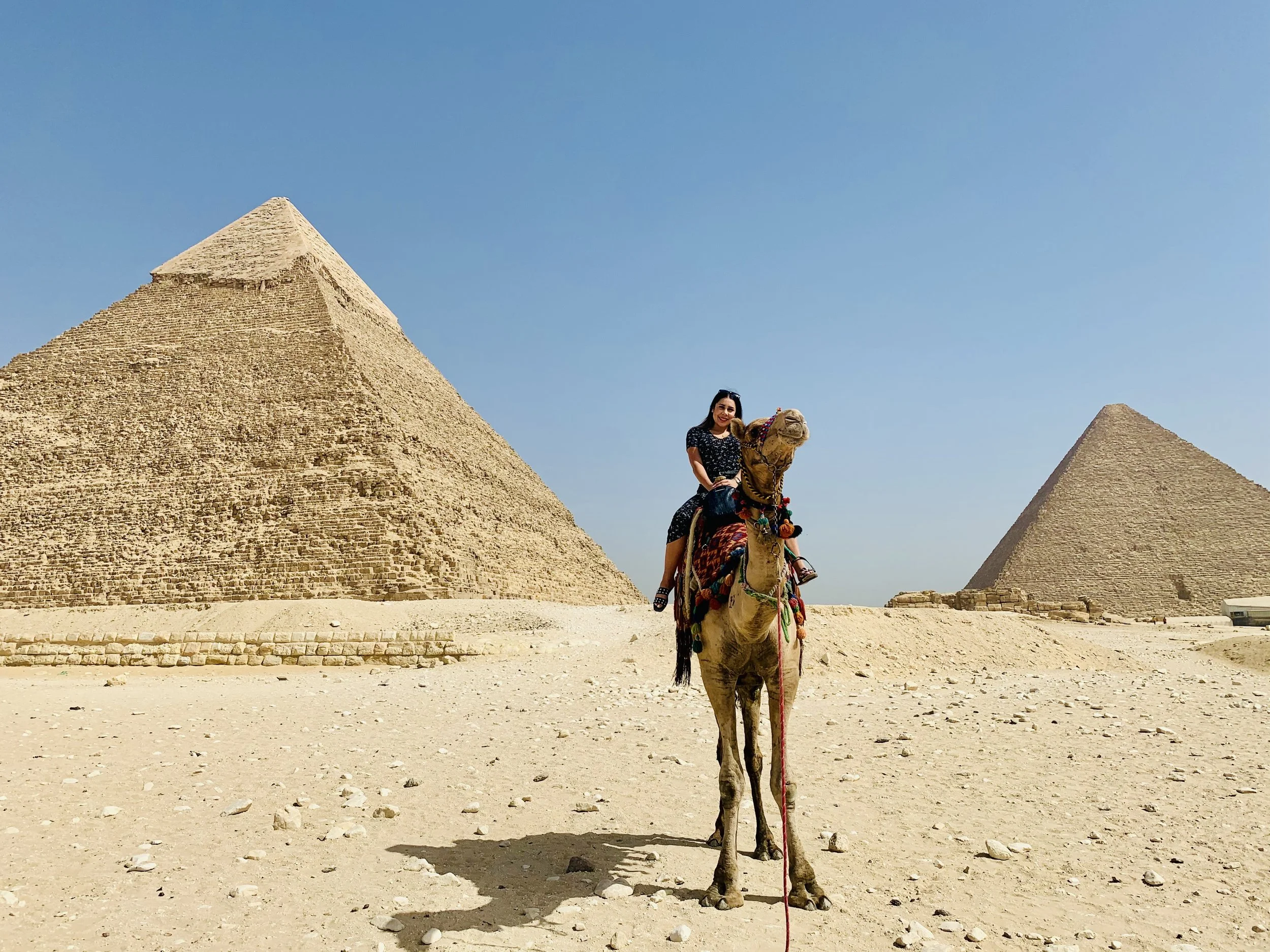
Cairo is one of those cities that grabs you by the collar the second you land. The noise, the smell of kofta on open grills, the call to prayer echoing across the skyline, it is overwhelming in the best possible way. I won't lie to you: Cairo requires more preparation than most destinations on this list. But the women who go prepared come back changed. The pyramids at sunrise with no one else around. Sipping mint tea on a rooftop with the Nile below you. Getting lost in Khan el-Khalili and finding a handmade silver ring that fits like it was made for you. Cairo is absolutely worth it, you just have to go smart.
THE VIBE -
Cairo is ancient, chaotic, layered, and completely magnetic. It is one of the largest cities in Africa and the Middle East — 20+ million people, 5,000 years of history, and an energy that never sleeps. This is not a destination for the passive traveler. Cairo rewards the woman who leans in: who haggles at the market, who accepts the tea, who asks questions, and who comes in with both an open heart and firm boundaries. It is not the easiest solo female destination, but it is one of the most unforgettable. Harassment is a reality here — we'll talk about it honestly — but thousands of solo women visit Cairo every year and have extraordinary experiences. Preparation is your superpower.
SAFEST NEIGHBORHOODS TO STAY -
Zamalek is the gold standard for solo female travelers. It sits on Gezira Island in the middle of the Nile and feels like a quieter, leafier city within the city. Boutique hotels, embassies, galleries, and excellent restaurants — and a noticeably calmer street environment than the rest of Cairo. This is where you want to be based.
Maadi is an upscale, expat-heavy residential neighborhood in southern Cairo. Very walkable, very international, and home to excellent coffee shops and restaurants. Slightly less central for sightseeing but a solid base if you want a slower pace.
Downtown Cairo (Wust el-Balad) has some great boutique options and puts you close to the Egyptian Museum and the Nile Corniche, but it is busier and requires more street awareness — especially at night. Fine to stay in if you choose a well-reviewed hotel with 24-hour reception, but not the most relaxed choice for your first time in the city.
Avoid booking accommodation in neighborhoods without clear tourist infrastructure. Stick to Zamalek or Maadi for your first Cairo trip.
THINGS TO DO SOLO -
The obvious ones are obvious for a reason: the Pyramids of Giza and the Sphinx are genuinely jaw-dropping and absolutely manageable solo — book a reputable guided tour rather than showing up independently to avoid the aggressive vendor situation at the gates. The Egyptian Museum in Tahrir Square is one of the greatest museums on earth and completely solo-friendly — plan at least three hours and hire an in-museum guide for context. Khan el-Khalili bazaar in Islamic Cairo is best visited in the mid-morning before it gets crowded — go with a confident stride, budget time to wander, and have a glass of karkadeh (hibiscus tea) at El Fishawy café, which has been open since 1773.
Coptic Cairo (also called Old Cairo) is a peaceful, beautiful neighborhood with ancient churches, synagogues, and monasteries — incredibly walkable and historically rich. A Nile dinner cruise is an easy and comfortable solo experience — many reputable operators run them nightly from Zamalek and Maadi. The Cairo Tower on Gezira Island offers panoramic city views and is a quick, easy solo excursion. For day trips, Saqqara (the step pyramid complex) and Memphis are far less crowded than Giza and completely worth it.
COMMON SCAMS TARGETING WOMEN -
The "closed today" scam. Someone approaches you near a major site and tells you it is closed, or that there is a special entrance — then offers to take you somewhere else. The sites are almost never closed. Ignore this and walk to the entrance yourself.
Fake guides at the pyramids. Men will approach you claiming to be official guides — they are not. Book your guide in advance through your hotel or a reputable platform like Get Your Guide or Viator.
The papyrus shop detour. Tuk-tuk or taxi drivers will offer to take you to a "government papyrus institute" that is actually a high-pressure sales shop. Agree on your destination before you get in and say no to any stops.
Overfriendly strangers offering tea. Tea invitations from men you have just met in markets can lead to high-pressure sales situations in back rooms of shops. El Fishawy at Khan el-Khalili is safe. Random invitations from strangers are not.
Taxi meter fraud. Negotiate the fare before you get in any taxi or simply use Uber — it operates reliably in Cairo and eliminates the negotiation entirely.
"Help" you didn't ask for. Men may grab your arm to guide you, offer unsolicited directions, or walk beside you uninvited. A firm, direct "la shukran" (no thank you) and walking away is your best tool.
CULTURAL DRESS & BEHAVIOR TIPS -
This is a conservative, majority-Muslim city and dressing accordingly is not just about respect — it genuinely reduces the amount of unwanted attention you will receive. Cover your shoulders and knees in public at minimum. Loose linen trousers, long flowy skirts, and lightweight long-sleeved tops work beautifully in the heat. Carry a large scarf at all times — you'll need it to enter mosques and it doubles as sun protection.
When visiting mosques, dress fully covered and remove your shoes at the entrance. In some mosques women and men enter through separate doors. At the pyramids and outdoor sites, lighter coverage is generally fine, but modest is still smarter.
Avoid direct, prolonged eye contact with men you don't know — in Egyptian culture this can be read as an invitation. Walk with purpose and confidence. Avoid wandering alone at night in areas outside Zamalek and Maadi. Public displays of affection (even with a partner) are considered inappropriate.
Learning a handful of Arabic phrases makes an enormous difference here. "La shukran" (no thank you), "ana mish mhtaga musa'da" (I don't need help), and "imshi" (go away / leave me alone) are worth memorizing. Egyptians deeply appreciate any attempt to speak Arabic and it shifts the dynamic immediately.
SOLO DINING GUIDE -
Solo dining in Cairo is very manageable once you know where to go. Sequoia in Zamalek is the city's most beloved waterfront restaurant — Nile views, excellent mezze, and a relaxed atmosphere where solo women are completely at home. Go for sunset. Cairo Kitchen (also in Zamalek) is a cheerful, cafeteria-style spot serving elevated Egyptian classics — the koshary and grilled kofta are extraordinary and the casual format makes solo dining effortless. Zooba is a popular modern Egyptian street food chain with locations across the city that are perfectly solo-friendly and quick. Kazaz in Zamalek is an upscale Egyptian restaurant with a warm, intimate atmosphere and staff accustomed to international solo travelers. Maison Thomas is Cairo's most iconic pizza and sandwich spot — open since 1922, no judgment, great coffee, and a comfortable solo lunch.
For breakfast, the rooftop café at Taftaf in Zamalek is a local favorite with a calm, creative crowd. Everywhere in Zamalek and Maadi is more relaxed for solo dining than downtown or the bazaar area. Stick to your neighborhoods, especially in the evenings.
WHAT TO DO IF SOMETHING GOES WRONG -
Save these contacts before you land. Egyptian Emergency Services: 122 (police), 123 (ambulance) Tourist Police: 126 — there are tourist police stationed at all major sites and they specifically assist travelers; many speak English Nearest major hospital to Zamalek: As-Salam International Hospital — +20 2 2524 0250 — English-speaking staff, internationally accredited US Embassy in Cairo: +20 2 2797 3300 | Located in Garden City, 5 Tawfik Diab Street | After-hours emergency line available for US citizens Careem and Uber: Download both before you arrive — use exclusively for transportation, never hail street taxis
If you experience harassment, you can report it to the Tourist Police at 126. Egypt passed a law in 2014 criminalizing sexual harassment and the tourist police do respond. If something is stolen, file a police report immediately at the nearest station — you will need it for insurance. Screenshot your accommodation address in Arabic (ask your hotel to provide it) so you can show drivers and helpers exactly where you need to go. Share your daily itinerary with someone you trust. WhatsApp works well in Egypt for staying in contact.
VISA AND ENTRY REQUIREMENTS FROM THE US
US citizens are required to have a visa to enter Egypt. The good news: it is straightforward. You have two options.
E-Visa (recommended): Apply online at visa2egypt.gov.eg at least 7 days before travel. A single-entry tourist visa costs $25 USD and is valid for 30 days from your arrival date. Multiple-entry visas are also available. Processing typically takes 3–5 business days. You'll receive a PDF to print or save to your phone.
Visa on Arrival: Available to US citizens at Cairo International Airport for $25 USD — cash only, paid at the bank kiosk before the immigration line. This is reliable but can involve lines. The e-visa is faster and less stressful on arrival.
You will need a valid US passport with at least 6 months validity beyond your entry date. You may be asked to show proof of onward travel (return flight) and accommodation details at immigration. There is no formal proof-of-funds requirement but having a hotel booking confirmation printed or saved is smart. Travel insurance is strongly recommended — Egypt does not require it but As-Salam International Hospital and other private hospitals require payment upfront for non-emergency treatment. Keep a copy of your passport and visa separate from the originals.